Social Development Centre

Uncategorized

Uncategorized

Livelihood upliftment through off season farming

In the winter season, mountainous areas like Bajhang district get snow covered, especially in Poush and Magh. Snow often piles up to a foot deep. At such times, even walking outside feels impossible, so no one ever imagined seeing ripe red tomatoes growing in tunnel houses. But today, that has come true. The Selakhet locals are not only surprised, they are filled with new energy and belief that technology can truly change their lives. Together, they have taken a bold step to make their village a tomato pocket area. Selakhet under the former Rithapata VDC is located near Chainpur, a district headquarter.  This remarkable change began with financial support from the Poverty Alleviation Fund and technical guidance from the Social Development Centre Nepal (SDC Nepal). Through their “Off-season Vegetable Cultivation and Infrastructure Development Program,” local farmers tested tunnel farming technology for the first time. Before, they were afraid of new ideas and depended only on the mercy of the weather. Now, they proudly grow tomatoes, cucumbers, bottle gourds, and many other vegetables—not just in one season, but all year round, even during cold winters and heavy rains. Local thanks to the nearby market in Chainpur, their produce always finds buyers. Once, Selakhet was a place where people survived on daily wage work, struggling to even afford salt and oil. But today, those same villagers have become confident and self-reliant farmers. Many who once walked long distances for labor work now earn Rs. 30,000 to 50,000 per season, right from their own fields. This transformation was led by the Selakhet Joint Community Organisation, which brought together 64 households from the Pragatishil and Surma Samudayik Samuha of Ward No. 3. They started small—with just 10 tunnel houses for trial farming. After seeing the success, they launched a movement called “One Household, One Tunnel,” with a dream to make Selakhet a fully vegetable-producing pocket area. According to institution chairperson Nawaraj Koirala, land that once produced only Rs. 1,500 to 2,000 worth of grain per season now gives vegetables worth up to Rs. 100,000 annually. Just this year, the village produced tomatoes worth Rs. 1.5 million. Seeing the success, farmers are now building 15 more tunnels, aiming to double their production next year. The SDC Nepal has also trained the farmers on modern farming techniques—proper seedling spacing, use of organic compost, pest control, pruning, nursery management, and the use of polybags and polythene domes for seedling growth. Farmer Kuber Kunwar shared that such practical training gave them the courage to take vegetable farming as a dependable livelihood. Similarly, farmer Khadka Bista proudly explained that they now use only organic methods, as chemical fertilizers and pesticides harm both soil and human health. With bio-liquid fertilizers and compost, their soil has become more fertile and pests have reduced. From the tomatoes he planted in Magh, Khadka earned over Rs. 30,000 by Jestha—a success he once thought impossible. By the end of Kartik, the community aims to build 15 more tunnels with loans from their revolving fund. Their goal is to make sure the entire tomato demand of Chainpur’s market is supplied by Selakhet. Alongside, the institution is also planning to provide drip irrigation systems and livestock improvement programs as subsidies for committed farmers. From hardship and snow to warmth and prosperity, Selakhet’s journey is truly a story of faith, unity, and transformation. The snow still falls in Magh, but inside the plastic tunnels, the red glow of tomatoes now shines with the promise of a bright, self-sustaining rural future. [This success story is from the SDC Nepal’s archive, 2013.]
Uncategorized

Drinking water access for Dewanna villager

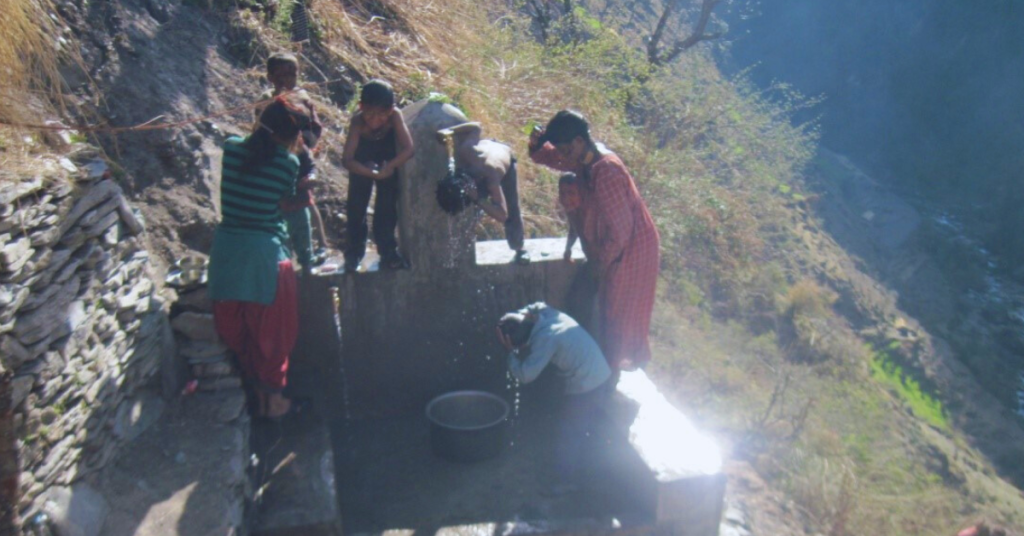
Despite having abundant natural resources, many people in the remote areas of Bajhang district were living a life with full of hardships due to lack of infrastructure. Among such villages, the people of Dewanna in Surma Rural Municipality (former VDC) have now turned their long-standing dream into reality, by bringing drinking water from a spring located nearly 4 KMs away. This has finally freed them from the generations-long problem of water scarcity. For years, the community suffered not only from physical hardship but also from the deep-rooted social belief that development projects were only for the privileged few. Due to lack of awareness and trust, government and donor-supported projects were often seen as means for the elites to benefit. However, everything began to change when Social Development Centre Nepal (SDC Nepal) worked with the support of the Poverty Alleviation Fund Program in 2013. It helped to form the Samaj Sudhar Samudayik Sastha in Ward No. 8, Dewanna, and took intervention for drinking water access.  “No one had ever imagined that we would one day have drinking water at our doorstep,” says Dhauli Bohora, a local beneficiary. “Earlier, we had to walk half an hour to drink water from a muddy pond full of leeches and worms. Now, having clean water just near our home feels like a dream come true.” The water project was supported with Rs. 1,260,928 in grants from the Poverty Alleviation Fund, while the local men and women contributed labor worth about Rs. 675,000. As a result, 35 households now have access to safe drinking water through eight taps. Among them, 12 families are Dalits, who had long faced caste-based discrimination that prevented them from accessing water from the so-called upper-caste ponds. Top Bahadur B.K., the secretary of the community organization, recalls, “We Dalits were never allowed to drink from the ponds used by the higher castes. We were forced to drink muddy water from the nearby stream throughout the year. Our children often fell sick from the dirty water. Now, with our own taps, we finally have dignity and health.” The drinking water access has brought remarkable transformation to the village. People have started building toilets, using waste water to irrigate their kitchen gardens, and maintaining cleanliness around their homes. According to Social Mobilizer Sadhana Bohora from the SDC Nepal, “Earlier, the village used to be dirty because even drinking water was scarce. But now, with easy access to water, people are motivated to make their ward open-defecation-free. The children who once looked unhygienic now appear neat and healthy.” To ensure sustainability, the community has appointed one caretaker responsible for maintenance. Each household contributes Rs 20 per month for his salary. In addition, a maintenance fund of Rs. 8,000 has been created by collecting Rs. 1,000 from each of the eight taps. “This will help us repair any future damages and keep the system running smoothly,” said community chairperson Bir Bahadur Jethara. The story of Dewanna is not just about clean water, it is about the transformation of mindset, unity, and self-belief. It stands as a living example that when a community comes together with determination, even the most difficult challenges can be overcome. [This success story is from the SDC Nepal’s archive, 2013.]
Uncategorized

Bajhang’s seven municipalities unite for watershed conservation 

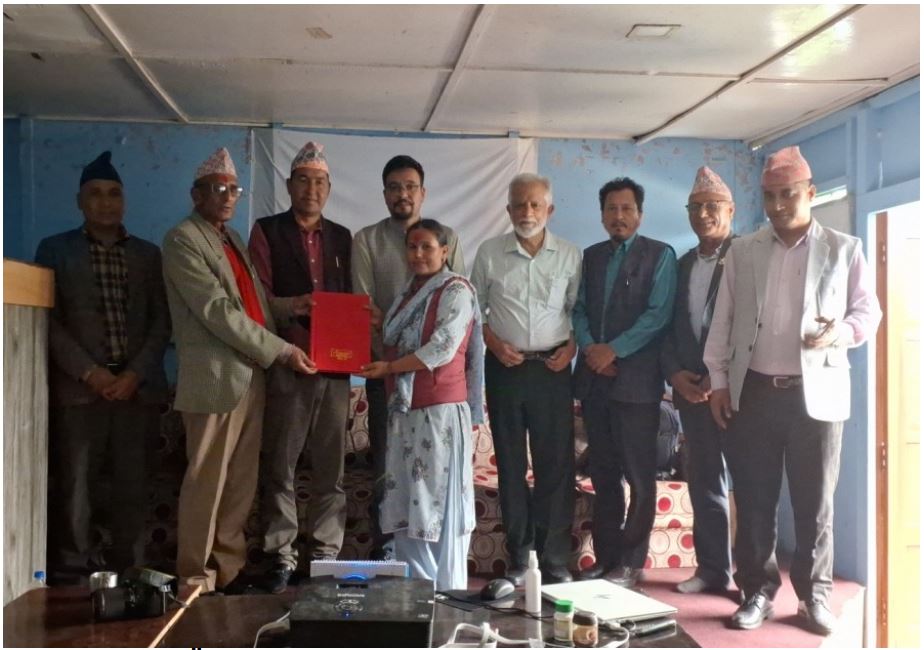
The local governments in Bajhang have formed a joint mechanism to conserve the aquatic biodiversity of the Seti River, which they are concerned is deteriorating. Seven municipalities in the region have collaborated to create the Aquatic and Aquatic Biodiversity Coordination Council to manage the watershed of the west Seti watershed. The municipalities of Talkot, Masta, ChhavisPathibhera, Thalara, Khaptadchhanna Rural Municipality, and Jayaprithvi Municipality in Bajhang have come together to form this mechanism.  The aim is to conserve and sustainably use the aquatic biodiversity in the watershed area and ensure equitable distribution of the benefits derived from it. This mechanism has been established to facilitate coordination between local governments and other stakeholders within the watershed area, according to ChetrajBajal, the mayor of Jayaprithvi Municipality. “The condition of the Western Seti watershed is deteriorating daily. The number of fish and other aquatic species here has decreased significantly,” said Bajal. “If the municipalities within the watershed area do not engage in its conservation, there could be a major crisis in the future.  Hence, we have formed this council. The council will now coordinate with local governments to formulate joint policies, plans, and programs for the conservation of the watershed and aquatic life.” USAID’s previous Paani project assisted five municipalities, and its ongoing USAID Biodiversity supported two others, providing technical assistance in preparing aquatic animal and aquatic biodiversity conservation Act (AABCA) for these seven municipalities. The council has been formed based on the provisions of this AABCA.  A local NGO, Social Development Centre, Nepal, facilitated the coordination among local level for forming the council. Although efforts had been made in the past to conserve and manage the watershed, they were ineffective when only one or two municipalities were involved. That is why the seven municipalities have now created a joint mechanism, said Gyan Bahadur Bohara, chairperson of Masta Rural Municipality. “In the past, we tried to regulate fishing and prevent pollution in the Seti River, but when the opposite-side municipalities didn’t enforce those rules, the conservation efforts were 38 ineffective,” he added. “Now, with the council, it will be easier to implement shared conservation programs by coordinating between the upper and lower riverbanks.”  The first meeting of the council decided to conduct research on watershed management methods with expert assistance and to develop and implement a watershed management plan through coordination. The 25-member council includes the chief and deputy chiefs of all seven municipalities, ward chairperson of Seti River region wards, representatives from community aquatic animal conservation groups (CAACG), and watershed management experts.  The leadership of the council has been given to Kedarseu Rural Municipality for one year, with Khaptadchhanna Rural Municipality as deputy. This initiative by the municipalities of Bajhang for watershed conservation is the first of its kind in Nepal, said Ganesh Bohara, chairperson of Kedarseu Rural Municipality and coordinator of the council. “Such a mechanism has not been formed in other districts for watershed and aquatic biodiversity conservation.  Although this is a new effort, we will work in a way that other districts in the country will also follow,” he said. He further explained that, while rivers and watersheds are essential for life, they have been neglected by all sectors. He emphasized that this effort is being made to prevent the Seti River from becoming another Bagmati. The council will work by coordinating with the committees and other bodies responsible for aquatic and aquatic biodiversity management formed at the municipal level.  Narayan Belbase, director of technical integration at the USAID Biodiversity, facilitated the council’s meeting. He briefed the representatives and stakeholders about the challenges, importance, opportunities, and the role of local governments in the conservation of aquatic biodiversity and watersheds.  “The enthusiasm shown by the local governments of Bajhang in the conservation of watersheds and aquatic biodiversity is truly commendable,” he said. “I believe that your joint effort and strong willpower will make this district a model for watershed conservation.” Previously, at the end of July, these municipalities of Bajhang had also issued a prohibitory order against fishing in the Seti River and its tributaries during the fish spawning seasons of AugustSeptember and February-March. 

Uncategorized

Local bodies initiative to combat climate change and to conserve aquatic animal 

SDC Nepal conducted one day training in six rural municipalities-Talkot RM, Chhabispathivera RM, Kedarsiun RM, Khabtadchhanna RM, Thalara RM and Masta RM to Strengthen Municipal Level Forest, Environment and Disaster Management Committee. This training is grounded in the principle of Sustainable Development Goal 13 (SDG 13, Climate Change), aimed to educate and empower representatives of Local Government and LG officials to understand and tackle the impacts of climate change.  The training provided a detailed overview of what climate change is, its causes and its impacts. Participants were educated on SDG 13, which calls for urgent action to combat climate change and its impacts. Participants were sensitized to different types of disasters induced by Climate Change, including floods, landslides, and extreme weather events. Rural Communities are often most vulnerable to the impacts of climate change, yet they have the least resources to mitigate these effects. The training highlighted the specific impacts of climate change on their communities.  They have faced increasing incidents of climate induced disasters like floods, landslides, drought, pest and disease in agriculture crops, drying up water sources, outburst of diseases etc. which threatened their livelihood. The most significant outcome of the training was the realization that combating climate change required awareness and action-specifically the allocation of resources. The participants, many of whom were Local Government Representatives, recognized the critical need to allocate budget to address climate change impacts.  A dedicated budget allows for the development and implementation of early warning systems, disaster response plans, infrastructure improvements and community awareness programs. These measures help prevent and reduce the impact of disasters before they occur, saving lives and minimizing damage. Also, in the event of a disaster, a preallocated budget ensures that emergency services, medical aid, food, water and shelter can be provided quickly. Without resources to manage and recover from disasters, communities can experience long-term disruptions, leading to social unrest and economic decline.  Following the training, these municipalities took bold steps to integrate climate change into their budgeting, planning and implementation. Besides that, Seti River, which used to have a wide variety of fish species, has experienced a significant drop in its fish population over the years. Various factors such as poisoning, electrical fishing, extensive net usage, and excessive fishing during breeding season had impacted the decline of aquatic life.  In response to the need for prompt action, rural municipalities have allocated budgets to implement the Aquatic Animal and Biodiversity Conservation Act (AABCA) and for executing a conservation program. 37 Six Rural Municipalities had allocated budgets for disaster management and for Aquatic Animal and Biodiversity Conservation Programs.  Talkot Rural Municipality had allocated NPR 1,305,000 for Disaster Management, NPR 160,000for Environment Protection and Climate Change adaptation Program and NPR 200,000 for Jal Jangal Conservation. Kedarsiun Rural Municipality had allocated NPR 6,000,000 for Forest, Environment and Disaster Management, NPR 200,000 for waste management and NRP 300,000 for Aquatic Animal and Biodiversity Conservation program. Khabtadchhanna Rural Municipality had allocated NPR 6,222,000 for disaster management, NPR 100,000 for forest and soil conservation and NPR 100,000 for Aquatic Animal and Biodiversity Conservation Act formation and implementation of conservation related programs.  Chhabispathivera Rural Municipality had allocated NPR 3,200,000 and NPR 80,000 for Aquatic Animal and Biodiversity Conservation Program. Remaining two municipalities; Masta Rural Municipality and Thalara Rual Municipality had also allocated a budget but not mentioned as their Redbook was not published yet. 

Uncategorized

Community groups’ interventions for aquatic biodiversity conservation

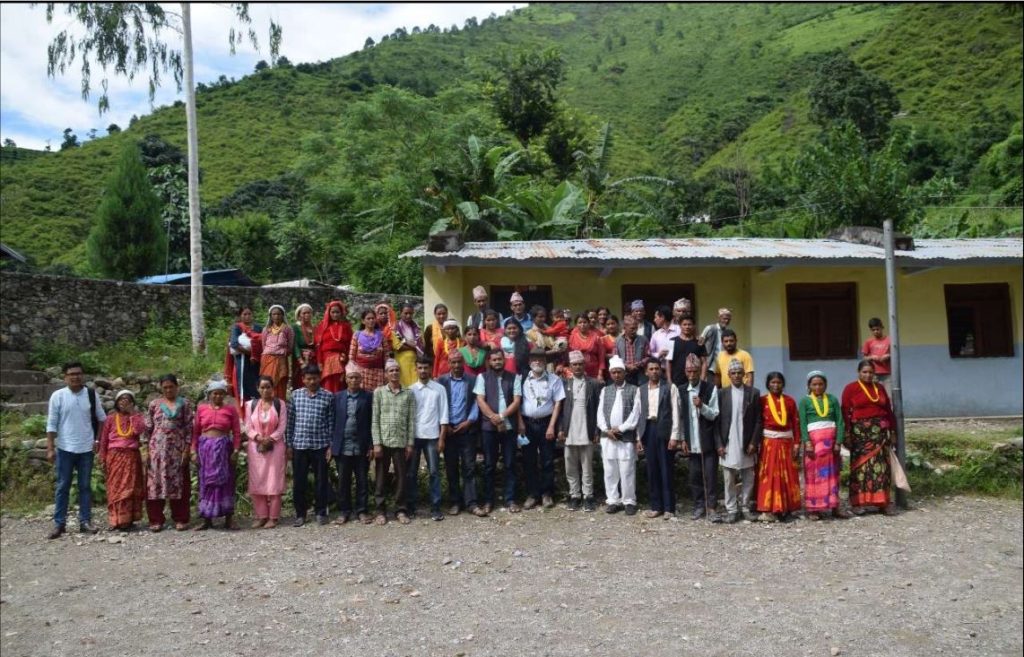
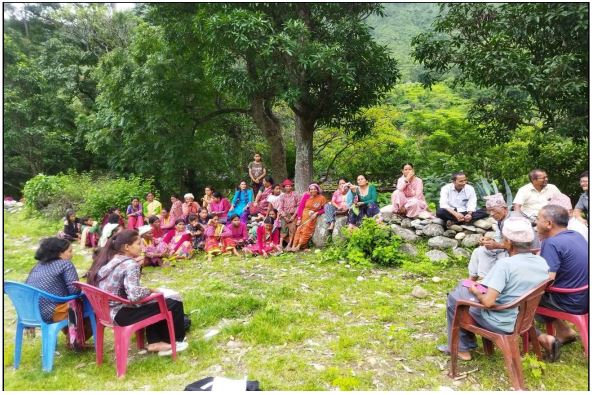
In an effort to conserve aquatic biodiversity and ensure sustainable use of aquatic animals, SDC Nepal conducted a training session in Kedarsiun Rural Municipality. This pivotal event led to the formation of Deura Community Aquatic Animal Conservation Group (CAACGs), a grassroots initiative aimed at conserving aquatic animals and managing aquatic ecosystems. The group’s journey began with active community involvement. The Aquatic Animal and Biodiversity Conservation Act (AABCA) has provision to handover the river segment to the community. Members were motivated to take ownership of the river segment they have been using from ancient times and to implement the conservation practices as well as sustainable utilization. After the formation of the group, eleven executive members of Deura CAACG demonstrated their commitment by contributing NRP 1000 which was deposited in the bank. There is provision to collect NPR 200 as member fee in CAACG Statute. Membership fees were collected establishing a financial foundation for future initiatives. The fund collected will be used for management and conservation of Aquatic Biodiversity. The bank account was opened and accessed through the joint signature of Chairperson, Secretary and Treasurer of CAACG. One of the early steps of the group was to create an official stamp, SDC Nepal has prepared the Statute of CAACG and it was registered in Kedarsiun Rural municipality. Registration of the group was a crucial move that ensured legal recognition and empowered them to take action under the provisions of CAACG statute. The group received their registration certificate, marking a significant milestone. To support the livelihood of community members they decided to invest the money collected from the CAACG members. They had lent NPR 40,000 to Ramba Devi Okheda, Vice Chairperson of Deura CAACG with an interest rate of 1% for 6 months. This initiative balanced the group’s focus on aquatic animal conservation with economic empowerment. Apart from this, with legal recognition on hand, the group moved swiftly to address an urgent concern; conservation of fish. Under the approach of SDC Nepal, Jal Jangal Project, Kedarsiun Rural Municipality had released notice regarding the restriction of fishing during the breeding season i.e. February-13 to April-13 and August-17 to October-16. The CAACG supported the rural municipality’s decision to restrict fishing during the breeding season.  They played an active role in spreading awareness by posting the notice released by rural municipalities in key areas including their villages, ward offices and rural municipalities. Also they conducted regular patrolling to monitor fishing in the river. The community collective efforts paid off as they successfully enforced the fishing ban in September and October Month. This proactive measure prevented overfishing during a critical time, helping to recover the fish population. The CAACG not only implemented the provision of AABCA but also set a precedent for other communities to follow. Their work demonstrates the importance of local involvement, legal backing, and a commitment to sustainable management. Through unity and dedication, this CAACG has become a shining example of how grassroots initiatives can make a real difference in the conservation of aquatic biodiversity for future generations.   Cover photo: a group photo with participants after the meeting conducted to draft the Aquatic Animal and Biodiversity Conservation Bill of Khabtadchhanna Rural Municipality.

Uncategorized

Aquatic animals receive new lease of life in West Seti River in Bajhang: Prohibition on fishing

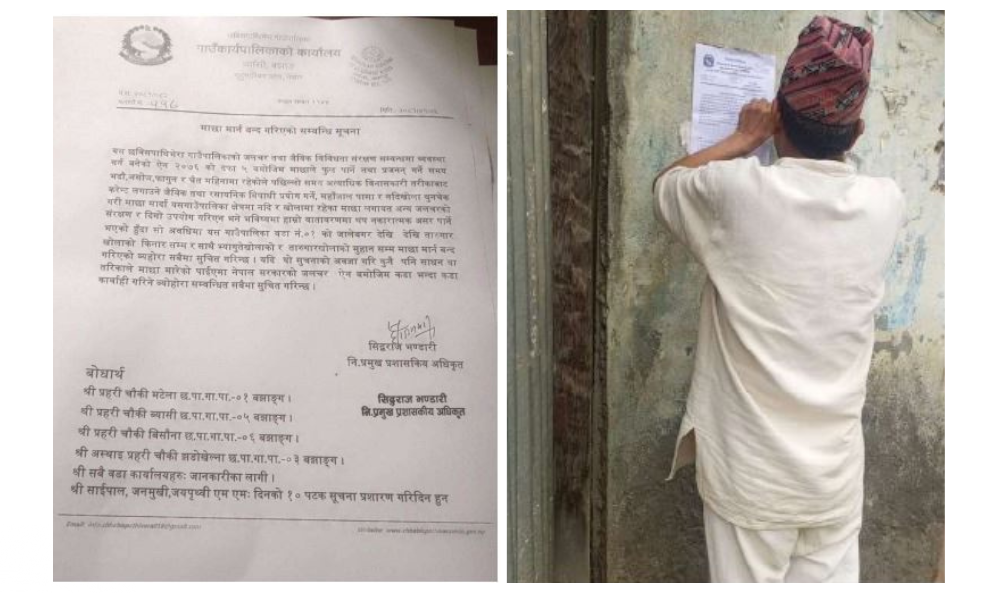
After five years of enactment of the ‘Aquatic Animal and Biodiversity Conservation Act in 2020 (AABCA) by five local governments (LGs) of Bajhang district, they have started the implementation of the AABCA that they had prepared and enacted with technical support of USAID-Paani Project in March 2020. It is really taken as a milestone in the history of Bajhang District. On the outset of implementation of the AABCA, Talkot, Thalara, Kedarsyun, and Chhabispathibhera Rural Municipality (RM) and Jayaprithvi Municipality have imposed moratorium on fishing along/across Seti River and its tributaries for four months – August 17 – October 16 and February 13 – April 13 (Bhadra, Ashwin, Phalgun and Chaitra) every year. For this exemplary task and to ensure that people are informed about the prohibition on fishing, the five LGs have been broadcasting notice every day five times in different FM radios and issued letters to different agencies and including Police to enforce moratorium effectively. This is probably the first time that the LGs have jointly prohibited fishing at watershed levels. USAID Biodiversity (Jal Jangal) APS grant partner Social Development Centre Nepal (SDC Nepal) a Bajhang based NGO, played a catalytic role which resulted into the issuance of the moratorium during spawning season. SDC Nepal organized sensitization programs for the elected representatives, staffs and other stakeholders on scope, status, opportunities and challenges of aquatic biodiversity with respect to the west Seti watershed and the provisions of the AABCA to make them aware of the provisions of the AABC Act that they enacted five years ago and to encourage them to implement the different provisions of the Act. Besides, SDC Nepal formed the Aquatic Biodiversity Management Committees in the five LGs and oriented them. After participation in series of sensitization activities conducted by SDC Nepal under the APS grant, LGs’ representatives and staff started showing concern about the declining fish stock and loss of aquatic biodiversity. The notice issued by Jayaprithvi Municipality states, “over the last few years, people have been fishing illegally by using poison, very small mesh size fishing nets, divert the river channel/flow, use electric current etc.; as a result, there is huge decline of fish stock in West Seti River and its tributaries in the West Seti Watershed. The notice also states that the Municipality herby prohibits any kind of fishing along/across the Seti River and its tributaries within the municipal areas as per the AABCA, 2076 during these four months August 17 – October 16 and February 13 –April 13 so that they could balance the aquatic eco-system and contribute for saving the life of aquatic animals. It also states that in case of non-compliance with the notice, the illegal fishers will be punished as per the provisions of law. Similarly, Chhabispathibhera Rural Municipality has also issued same kind of notice which mentions that they are worried about the decline in fish stock because of destructive fishing during their spawning season, Siddha Raj Bhandari, Acting Chief Administrative Officer reported. He also says that around 80% fish population has declined in the nearby river of the rural municipality’s area over the years. If they are able to control the illegal fishing during these four months, they can ensure the life of the unlimited numbers of fishes. Accordingly, they prohibited the illegal fishing”, Bhandari Said. Kedarsiyun Rural Municipality has also released same kind of notice to save the aquatic animals and biodiversity. Mr. Ganesh Bohara, Chairperson of Kedarsiyun said, “Since the number, size and varieties of fishes have been decreasing in the West Seti Watershed over the years, they are compelled to rethink and prohibit illegal fishing practices.” He added, “Deura is the area of Kedarsyun RM where we used to catch a single fish weighing around 30/40 Kg’s in the Seti River, however, it is like a dream nowadays. It is even difficult to catch fishes weighing one to two Kg’s as well. Therefore, to revive the fish stock both abundance and size, we discuss and decide to implement the law all over the RM.” For sensitizing them, he thanked USAID Biodiversity (Jal Jangal) Project on behalf of the RM.  Dhan Raj Kami, a resident of Jayaprithvi Municipality, reported that Satto fish (Mahseer) which even weighs up to 65 Kgs has also disappeared from Seti River over many years. Nearly 40 years before, he used to catch such fishes, but nowadays, neither he heard about it nor witnessed himself.  According to him, Satto fish is considered as medicine for Malayria and diseases that originate from extreme heat. Some people are protesting against the moratorium on fishing in the spawning season through social media expressing that the LGs started to oppose their fishing rights which they have been utilizing over many years. However, majority of people have fully supported the prohibition on fishing since it is sustaining the aquatic ecosystem. This conservation campaign and movement was firstly initiated by Jayaprithvi Municipality by mediating urgent notice through Radios and social media on 8 August 2024. People expressed their vent a lot on Jayaprithvi Municipality as it was the lone crusader first. Later, other four LG also issued their moratorium notices, one after another, in a collaborative and competitive ways. As a result, the voices opposed through social media have been minimized continuously. Yuvraj Bhandari, District Superintendent of Police and Chief of District Police Office, Bajhang, stated that the police have also been informed to assist in the implementation of the municipalities’ decision to ban fishing for two months and that they will provide all possible support. “The municipalities’ decision to conserve aquatic biological diversity is a good one,” said Bhandari, “We will fully support its implementation. If anyone is found fishing during this period, the police will catch them and hand them over to the respective LG.” Nowadays, five different FMs of Bajhang district Saipal FM, Jayaprithvi FM, Bajhang FM, Thalara FM and Kedar FM have been disseminating the notices on prohibition on fishing continuously. All the five LGs said that they would continue to prohibit and

Uncategorized

Jayaprithvi municipality removes fish traps

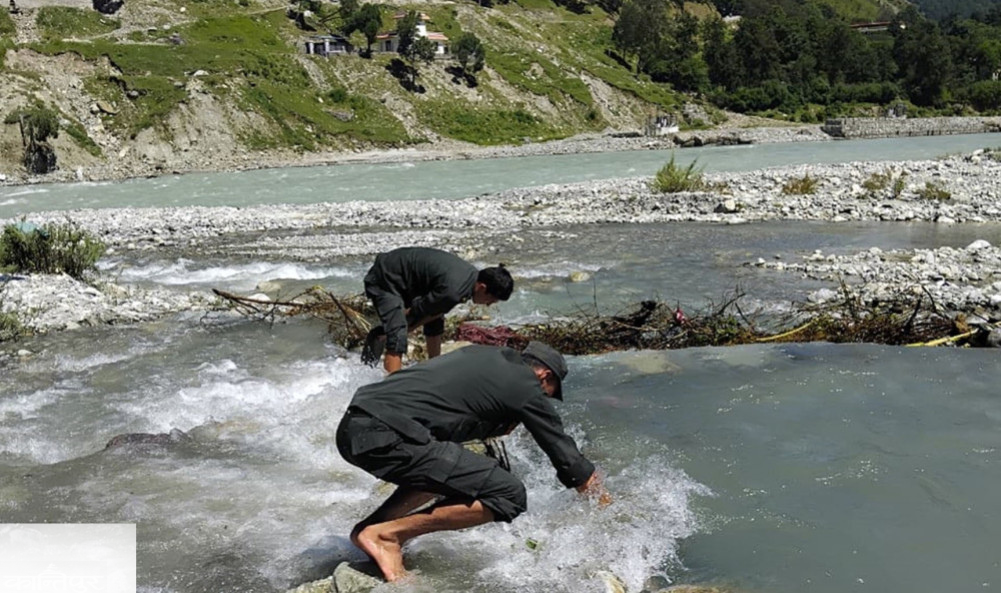
Recently, the Jayaprithvi municipality removed the “Tip” nets, the fine bamboo traps that had been laid across the Seti river and other streams to catch fish during their most vulnerable time, during the months of Bhadra and Asoj. These are not just any months; they are the sacred season when fish lay their eggs, when life begins again beneath the ripples. Ignoring the municipal restriction, some locals had continued to set traps along the Dungrigad and Bahuliaad streams. But led by the municipal police chief Rajendra Khadka, officers waded into the waters, pulling out the nets one by one. “We first warned and made them understand,” Khadka said. “But if anyone repeats this act, legal action will follow.” Experts say that during the rainy season, when the big rivers turn muddy and fierce, fish seek shelters in small streams, only to return to the main river around Bhadra and Asoj. Yet, it is in this very moment of return that many people divert the water flow and lay traps, barring the fish from completing their ancient journey.Mayor Chet Raj Bajal said, “These months are the time not only for breeding, but also for the fish to return home from the small streams to the Seti. When we block their way, we are not just catching fish — we are silencing a species.” He emphasis that the municipality’s ban is not merely a restriction, but a gesture of renewal. “If we stop fishing only during breeding season,” he said, “the number will rise again. When fish thrive, the river’s ecology thrives, and so do the people who depend on it for their livelihood.”The spirit of protection has now spread across Bajhang. Not only Jayaprithvi, but also Talkot, Thalara, Kedarsyun, and Chhabispathibhera rural municipalities have imposed a four-month fishing ban along the Seti River and its tributaries, during Bhadra, Asoj, Fagun, and Chaitra, the seasons when fish lay eggs, reproduce, and migrate.Under the Aquatic Life and Biodiversity Protection Act, 2076, the municipalities have issued strict orders, violators will face legal consequences. The municipalities’ findings are alarming. Over the years, fishermen have caught pregnant fish, killing future generations before they could even begin. Studies show that a single Asala fish weighing one kilo can lay over 14,250 eggs at once. The loss of even a few such fish ripples through generations — until silence takes over where life once swam.Today, the Seti River carries that silence in its current form. Studies reveal that in just fifteen years, the number of fish species in the river has dropped by more than 70 percent. This story was originally published in the national newspaper in September 2024.

Uncategorized

Bajhang farmers, students learning to cope with climate challenge through Jal-Jangal program

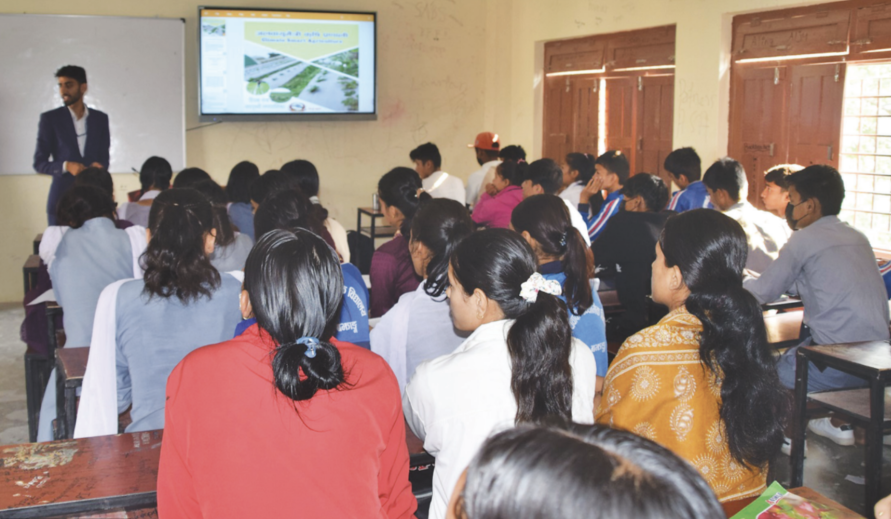
Lalita Bohora of Dhalaun in Saipal rural municipality has been doing a junior technical assistant course in agriculture for a year and a half at Jalpa Secondary School.Bohora is learning how to plant crops, control pests, and other modern farming practices.The field also demands she learn about climate change, an emerging issue threatening global agricultural production. Nepal is one of the most vulnerable countries to climate change.Changes in rainfall pattern, extreme weather incidents, and the proliferation of pests have been directly hitting crop production and threatening food security.The course she is pursuing offers little knowledge about climate change, but a two-day training she attended recently was of some help.“While studying the 10-month course, I learned new things, and practical know-how on crop plantation and harvest,” Bohora said. “The training I received on climate change was more useful.” In the north-western corner of the country, one of the most vulnerable areas to climate change, farmers and students are being educated on climate impact mitigation. It taught them how to adapt farming techniques to the changing climate.According to a new survey report, climate change has profound impacts on Nepal’s economy, particularly agriculture, water resources, and biodiversity.The findings of the National Climate Change Survey 2022, the second of its kind, were recently released by the National Statistics Office, formerly the Central Bureau of Statistics. The report paints a bleak picture of Nepal’s climate situation and urges necessary intervention for the resource-crunch Himalayan nation.According to the survey, economic losses on and off-farm in the past five years, as reported by households, amounted to Rs415.44 billion. This does not include significant infrastructural damages. In Nepal, the number of households unaware of the consequences of climate change is significantly high.The survey shows that many households reported adverse weather changes. They noted that their water resources dried up, new diseases infected crops, productivity losses rose, and flowering and fruiting behaviours changed over the last two and a half decades. According to the survey, over the past 25 years, approximately 50 percent of households reported the emergence of new diseases in their crops, 53.9 percent observed the presence of new insects or pests affecting their crops, and 29.8 percent of households noted the appearance of new diseases in their livestock.Rural areas experienced more new diseases affecting crops (55.9 percent) than urban areas (45.6 percent). The mountain (68.7 percent), hill (50.3 percent), and Tarai (46.3 percent) regions also experienced an impact on crops due to new diseases.Agriculture is the mainstay of Nepal’s economy. It contributes 24.60 percent to the country’s GDP and employs over half the population. The sector is heavily dependent on rainfall. For Susmita Thapa, a grade 12 student at Satyabadi Secondary School, receiving training on climate change has been an eye opener.“We learned the inter-relation between agriculture and climate change,” said Thapa. “Our formal classes do not teach about climate change, its impact, and the ways to tackle it.”Training participants said they have learned how to tackle climate change’s impact on crops. Thapa also was informed on various climate adaptation measures. “The learning will be beneficial.”Amid the growing impact of climate change on agriculture in recent years, farmers in Bajhang have been informed on the challenges and ways to tackle the emerging problem. They have been acquainted with sustainable farming systems to boost output.The training was supported by the Biodiversity (Jal-jangal) program of the USAID, Social Development Centre, a local organisation.“We stopped sowing local seeds after their yield declined. Now I know why this was happening,” said Birkha Mijar, a farmer in Thalara rural municipality Ward 9. “We knew what local seeds meant for sustainable farming. We also know the way to sow them. I will apply what I learned in the field.” Kubendra Rokaya, an instructor, said he has trained 600 students and farmers in the district on mitigating the impacts of climate change on agriculture.“Farmers in the far-western Nepal are unhappy as commercial farming is not very profitable. On top of that, climate distress has been a headache for farmers,” Rokaya said. “We can tackle the impacts of climate change by using local resources and technology. But many farmers are unaware of this.” The training has taught them new practices.“We have informed them on the impact of climate change at the local level, use of weather information, pest management, seed selection and early warning system,” Rokaya said.Amit Banmala, coordinator of the Social Development Centre Project, said students pursuing agriculture science and agriculture JTAs are Nepal’s future guides to farming. Many of them are engaged in agriculture. The agriculture sector in Bajhang faces drought in the winter and excessive rainfall in the rainy season.According to the Agriculture Knowledge Centre, droughts last year reduced winter produce by 20 percent.“Landslides and floods compound the problem in the agriculture sector every year,” said Tek Bahadur Bista, the centre’s chief.“Farmers are facing additional trouble. It’s important for them to learn about mitigation measures.” It was originally published at The Kathmandu Post on 21st July 2024 Cover photo: Students studying agriculture science at Satyawadi Secondary School are trained on climate friendly agriculture in Bajhang.

Scroll to Top