

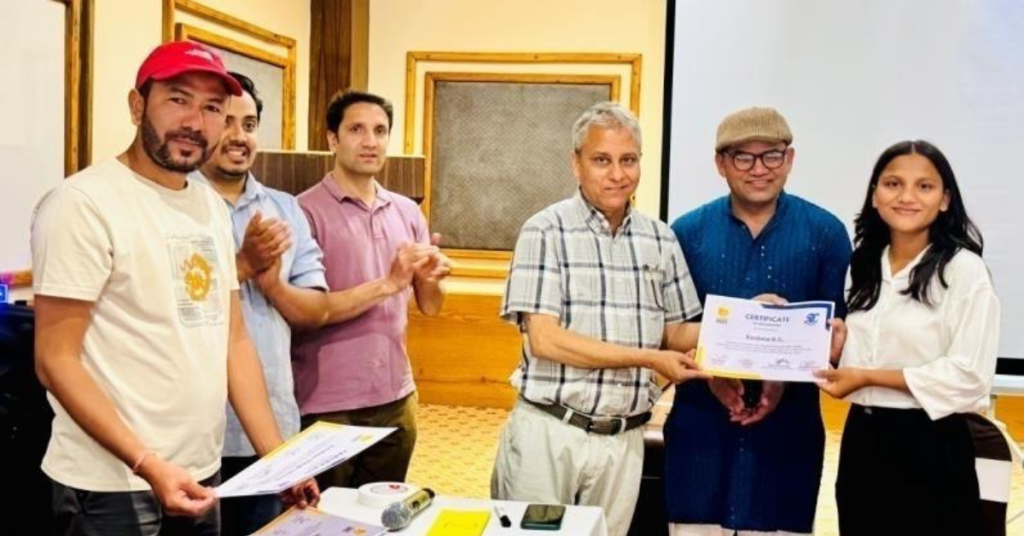
Empowering local media and journalists for accountability in Sudurpashchim
The year 2025 witnessed significant political and social changes across Nepal. Public debates on federalism, governance reforms, anti-corruption efforts, and service delivery gained momentum. At the same time, a new generation of young people–especially Gen Z–began using digital platforms to demand transparency, challenge traditional power structures, and call for greater accountability from public institutions. While these developments created opportunities for stronger civic engagement, local journalists continued to face significant challenges. Limited access to official information, inadequate skills in data analysis, political pressures, and weak institutional support often constrained their ability to undertake investigative reporting. Many reporters, especially in rural districts, relied heavily on event-based reporting and official statements, leaving little room for deeper scrutiny of governance and public accountability issues. Against this backdrop, the Social Development Centre Nepal (SDC Nepal), with support from International Alert, implemented the project ‘Strengthening Democracy: Voice, Civic Engagement, and Accountability’ in Sudurpashchim Province. The initiative aimed to equip journalists with the knowledge, tools, and confidence needed to serve as effective watchdogs of democracy and contribute to transparent and accountable governance. The project adopted a structured approach that combined capacity building, mentoring, fellowship support, and continuous monitoring. As part of the initiative, a comprehensive training on data-driven journalism was organized for local journalists. The training focused on accessing and analysing public data, investigative reporting techniques, verification and fact-checking, the Right to Information (RTI), digital security and journalist safety, as well as professional ethics and responsible reporting. A total of 14 journalists–seven female and seven males–participated in the training. Following the capacity-building programme, a mentoring and fellowship scheme was launched. Four journalists were selected as fellows and received technical guidance and editorial support to produce in-depth investigative and data-driven stories. The fellows went on to produce four reports on issues of public interest, covering governance and accountability, public finance and budget transparency, environmental risks, and public service delivery. These stories demonstrated the practical application of the skills acquired through the project and highlighted the role of evidence-based journalism in promoting public accountability. Before the intervention, many journalists relied primarily on press releases, official statements, and single-source information. Through training and mentorship, participants strengthened their ability to analyse municipal budgets and public records, file RTI requests to obtain official information, use spreadsheets and digital tools for data analysis, verify information through multiple sources, conduct field-based investigations with affected communities, and present balanced, evidence-based narratives. Changes in KnowledgeQuote (Before–After Knowledge):“Earlier, I relied on press statements; now I can read budgets and verify data myself.”- Janak Bista, Fellow JournalistImpact: Journalists shifted from statement-based to evidence-based reporting.Changes in AttitudeQuote (Before–After Attitude):“I used to avoid sensitive issues, but now I see questioning authorities as part of my professional duty.” –Ranjana Bk, Training ParticipantImpact: Increased professional confidence and public-interest orientation. By strengthening journalists’ capacity to use data, verify information, and investigate issues of public concern, the project contributed to enhancing the quality and credibility of local media in Sudurpashchim Province. It also reinforced the important role of independent journalism in fostering informed public discourse, promoting transparency, and strengthening accountability at the local level.